The night Grant Mercer walked behind that saloon, he wasn’t searching for trouble, justice, or redemption; he merely wanted to buy supplies and get back to the quiet life he had built, far away from the violence that once defined him.
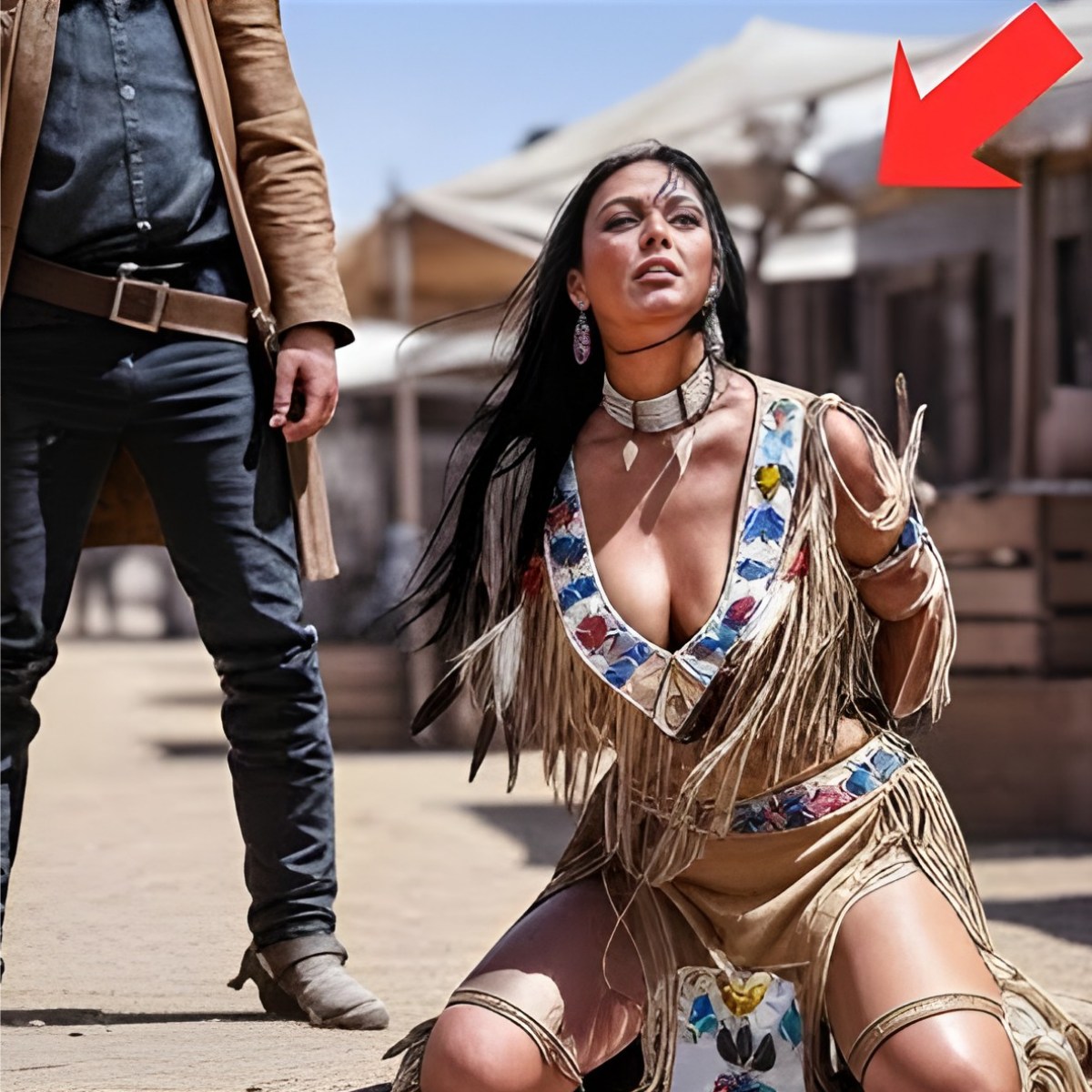
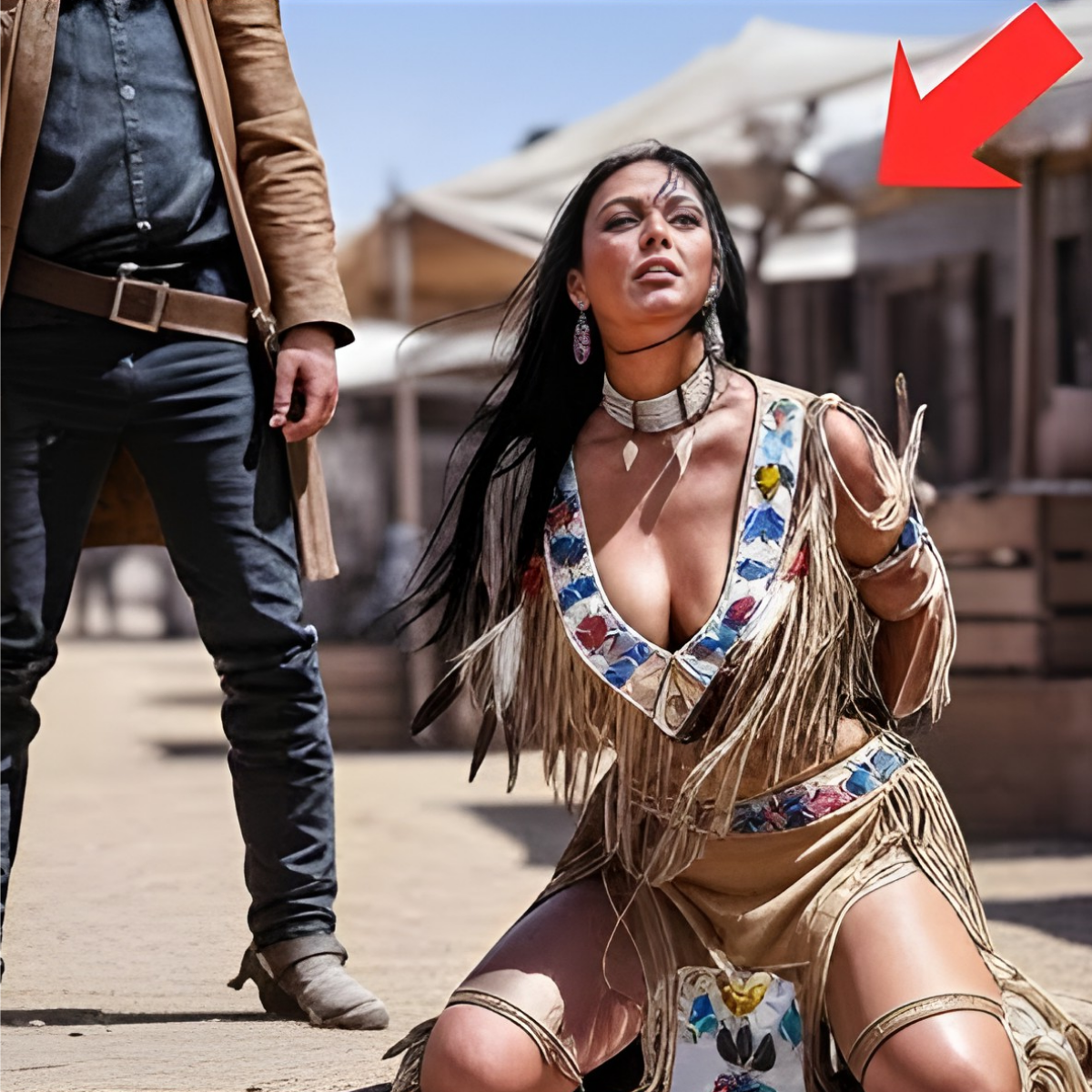
But destiny rarely asks permission, and when he saw the Apache woman chained to a wooden post like an animal broken for sport, the world around him shrank to a narrow tunnel where only her trembling breath existed.
Witnesses say she looked half-starved, her wrists pulled high above her head, the iron cuffs biting into skin rubbed raw by repeated struggles, while bruises mapped her arms like a gallery of cruelty inflicted by men who felt untouchable.
Her torn deerskin dress clung to her in ragged strips, revealing both her dignity and her desperation, and yet despite the violence stamped upon her body, her eyes remained alive, sharp, frightened, and searching every face in the jeering crowd.
Those same witnesses claim she wasn’t searching for mercy; she was searching for the person least likely to destroy what little remained of her spirit, scanning each man with a quiet, hopeless calculation that broke even the hardest bystanders.
Grant Mercer insisted later that he did not consciously choose to step forward, that his boots moved on their own, drawn by something he could not name and had tried to bury years earlier when he left the world of war behind.
The men surrounding her turned as he approached, some drunk, some amused, some irritated that a stranger would interrupt what they called an “auction,” though everyone present understood exactly what they were selling.
But the Apache woman did not look at them. She looked at him. Directly. Steadily. A connection so immediate that several onlookers later admitted it felt like watching fate rewrite itself in real time.
Then, with a voice so soft it was meant only for him, she whispered the words that would ignite the storm: “Please… buy me. Make me your wife. If not a wife… then anything. Just don’t let them take me.”
Her voice broke on the last plea, and something inside Grant Mercer—something cold, old, and coiled tightly for years—unwound into a fury sharper than any blade he ever carried in his soldiering past.
He had vowed never to fight for anyone again, never to bleed for another soul after losing too many on the battlefield, yet the sight of her chained and trembling shattered every stubborn wall he had built for self-preservation.
Witnesses recall how he pushed through the circle of boots and stale whiskey breath without a single hesitation, stepping forward with the calm, lethal certainty of a man who had once commanded fear across entire frontiers.
The laughter stopped.
The taunts died.
Even the drunken swagger dissolved into a tense, uncertain silence as he planted himself directly in front of her, blocking her from every man waiting to bid for her suffering.

What he said next would ripple across the territory for months: “I’m buying her. All of her. Right now.”
Those six words didn’t merely interrupt an illegal sale—they detonated a moral earthquake, forcing every man present to confront someone unafraid to expose their cruelty under the lantern glow of a midnight alley.
Local sheriff reports later revealed that the so-called owner had no legal claim to the woman at all, meaning the entire scene was a kidnapping disguised as frontier commerce, a fact that only added fuel to the explosive aftermath.
Some men in the crowd tried to protest, insisting Grant had no right to interfere, but his expression—calm, steady, and haunted by a violence he never wanted to release again—sent them stepping backward without further argument.
And though he didn’t realize it in that moment, the decision he made out of instinct, compassion, and righteous anger would not only alter her fate, but entwine their lives in a way neither could ever have foreseen.
What followed became the subject of tavern tales and newspaper speculation, with rumors spreading that Mercer paid not just with money, but with threats, promises, and a cold warning that no man in that alley dared to challenge.
Some say the Apache woman collapsed into his arms once the shackles fell, finally allowing herself the relief of safety after days of captivity; others claim she remained standing, gripping his coat with trembling fingers as though anchoring herself to life.
Regardless of which version is true, one fact remains undisputed: she never looked away from him, not once, not even when the crowd dispersed and the saloon door slammed shut behind cowards unwilling to face their own reflection.
Mercer led her away from that alley with a quiet protectiveness that shocked those who knew him as a solitary figure, a man worn down by grief, guilt, and the relentless ache of memories he rarely spoke aloud.
Over the following weeks, whispers spread across the territory that Grant Mercer had taken the woman into his home—not as property, not as a servant, but as a human being worthy of respect, healing, and a chance at rebuilding whatever the world had stolen from her.
Some insisted she saved him as much as he saved her, pulling him out of the darkness he carried with the fierce, unbroken spirit that had survived captivity and cruelty no one should ever endure.
Others argued he became a target for men angered by his interference, forcing him to face the very violence he had sworn to abandon, sparking conflicts that would follow him across the frontier.

But the truth—the real truth—comes from a diary entry later attributed to the Apache woman herself, written in careful strokes learned long after her rescue: “The night he bought my freedom was the night I bought his heart.”
Historians debate the quote, but the impact remains undeniable: a single act of defiance turned into one of the most retold love-and-justice stories of the American West, challenging myths, exposing brutality, and redefining what heroism could look like.
For Grant Mercer, it was never heroism.
It was instinct.
It was anger.
It was humanity refusing to stay silent.
And for her, it was the moment a whispered plea reshaped destiny—because the truth is simple, powerful, and unforgettable: she didn’t just survive that night.
She changed the rest of his life forever.